Reviewed formula
Terminalia arjuna (Arjuna) cardiovascular pharmacology review — the canonical Ayurvedic Hridya lead herb's modern research base
Catalogue editorial review
Arjuna + Pushkarmool + Jatamansi + Guggul + Shankhapushpi + Tagar — Ayurvedic Hridya Rasayana heritage
Hridya — the Sanskrit cardiac-tonic category — has anchored Ayurvedic cardiovascular practice for more than two thousand years through the Charaka Samhita's Hridroga-Chikitsa and Sushruta Samhita's Uttara-tantra texts. India's contemporary cardiovascular-disease profile is shaped by genuine epidemiological pressure: Indian-led research consistently documents earlier onset of cardiometabolic concerns in Asian-Indian adults than in Western cohorts, with the 40-65 demographic representing the largest screening-and-wellness cohort. Modern Indian-led classical pharmacology framework over the past three decades has validated the cardiovascular pharmacology of several classical Hridya herbs — Arjuna's arjunolic acid and casuarinin, Pushkarmool's alantolactones, Jatamansi's jatamansone, Guggul's guggulsterones (Z- and E-isomers), Shankhapushpi's scopoletin, and Tagar's valepotriates — at modern standardised doses. Cardioton synthesises all six into a twice-daily after-meal capsule for Indian adults already under regular cardiovascular medical care who want a Sanskrit-tradition nutritional adjunct distinct from the modern Mediterranean approach in Cartiofin. Cardioton is a SUPPORT layer alongside ongoing physician-directed care — never as a substitute for prescribed cardiovascular medication.
Terminalia arjuna (Arjuna) cardiovascular pharmacology review — the canonical Ayurvedic Hridya lead herb's modern research base
Catalogue editorial review
Commiphora mukul (Guggul) modern wellness framework
Catalogue editorial review
Nardostachys jatamansi (Jatamansi) phytochemistry and pharmacology review — calming + cardiovascular activity at the molecular level
Catalogue editorial review
Asian-Indian cardiovascular-wellness screening cohort — Cardioton's target demographic, taken alongside annual cardiologist-directed routine monitoring
Indian cardiovascular-epidemiology surveillance
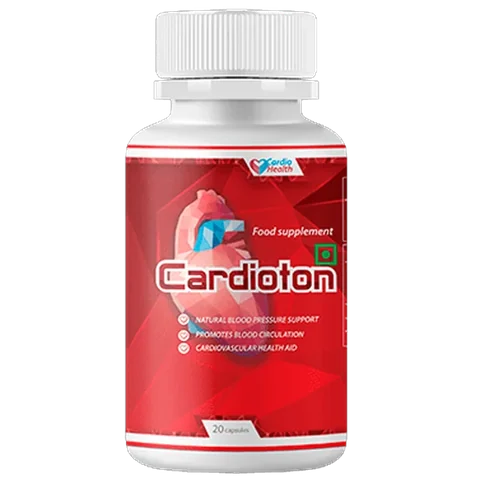
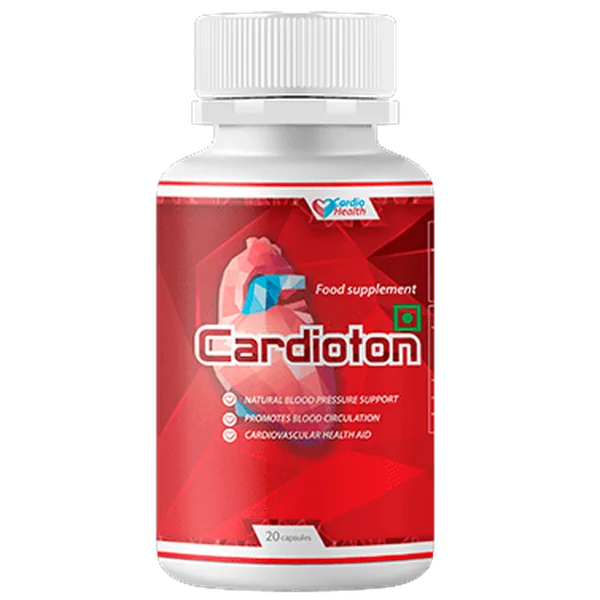
Cardioton is a pure Ayurvedic cardiovascular-wellness formula built on the classical Hridya Rasayana tradition — the Sanskrit Hridya (cardiac-tonic) category described in the Charaka Samhita Chikitsa-sthana and Sushruta Samhita Uttara-tantra texts more than two thousand years ago. The formulation combines six classical Hridya herbs whose mechanism of action has been characterised in classical pharmacology framework: Terminalia arjuna (Arjuna — THE canonical Ayurvedic cardiac tonic), Inula racemosa (Pushkarmool — classical Hridya root), Nardostachys jatamansi (Jatamansi — calming-and-cardiovascular rhizome Rasayana), Commiphora wightii (Guggul — gum-resin with lipid + cardiovascular research literature), Convolvulus pluricaulis (Shankhapushpi — Medhya + cardiovascular calming herb), and Valeriana wallichii (Indian Tagar — Himalayan species in the classical Hridya category). Cardioton sits in a deliberately different lane to Cartiofin's modern Mediterranean cardiovascular formula (CoQ10, magnesium citrate, hibiscus, aged garlic, hawthorn, olive leaf) in this catalogue — Cardioton is the Sanskrit-named Ayurvedic Hridya Rasayana tradition translated into modern dose standardisation. Cardioton is positioned strictly as a nutritional Ayurvedic adjunct for adult Indians under regular medical care; it is NOT a treatment, cure, or replacement for prescribed antihypertensive medication, statins, antiplatelets, anticoagulants, or any cardiovascular drug. Anyone with diagnosed hypertension, ischaemic heart disease, atrial fibrillation, post-MI care, heart failure or any cardiovascular condition must remain under their treating cardiologist or physician's care and continue prescribed treatment without modification.
20 capsules (10-day course)
1 capsule twice daily, 15 minutes after breakfast and dinner
Notified under Indian nutraceutical framework
Cardioton arjuna + pushkarmool + jatamansi + guggul + shankhapushpi + tagar — ayurvedic hridya rasayana heritage is formulated to support the following aspects of heart & circulation. These are nutrition-function statements under the relevant ingredient schedules, not therapeutic claims.
Daily Ayurvedic cardiovascular-wellness nutritional adjunct alongside physician-directed care
Classical Hridya Rasayana tradition with modern dose standardisation
Arjuna cardiac-tonic pathway — bark extract standardised to arjunolic acid
Pushkarmool classical Hridya root — alantolactone research base
Jatamansi + Tagar calming-cardiovascular complement — Indian Himalayan herbs
Guggul + Shankhapushpi anti-inflammatory polyphenol layer
Active nutrients, their roles, and the published research backing each one.
Terminalia arjuna — bark extract standardised to arjunolic acid
Terminalia arjuna is the canonical Ayurvedic Hridya cardiac tonic of the Charaka Samhita's Hridroga-Chikitsa treatise. Its bark contains arjunolic acid (a pentacyclic triterpenoid), arjunone, casuarinin and a flavonoid family characterised in classical pharmacology framework for cardiovascular-tissue activity at standardised doses.
Inula racemosa — root extract standardised to alantolactones
Inula racemosa is a classical Ayurvedic Hridya root described in Sushruta Samhita with documented sesquiterpene-lactone pharmacology (alantolactone, isoalantolactone). modern wellness research has characterised Pushkarmool's cardiovascular activity at standardised doses.
Nardostachys jatamansi — rhizome extract standardised to jatamansone
Nardostachys jatamansi (Spikenard) is a classical Ayurvedic Hridya rhizome with sesquiterpene-rich (jatamansone, jatamansic acid) pharmacology characterised in modern wellness research. Classical Ayurveda places Jatamansi in both the Medhya (mind-supporting) and Hridya (cardiac-tonic) categories — reflecting the Ayurvedic understanding that emotional and cardiovascular wellness are interconnected.
Commiphora wightii (syn. Commiphora mukul) — gum resin standardised to 2.5% guggulsterones
Commiphora wightii gum resin contains Z- and E-guggulsterones, characterised in reviewed clinical-trial research for cardiometabolic-wellness endpoints. Guggul has been a foundational classical Rasashastra resin for centuries, used in compound formulations like Tribhuvankirti Rasa and Yogaraj Guggul in Ayurvedic practice.
Convolvulus pluricaulis — whole-plant extract
Convolvulus pluricaulis (Shankhapushpi) is the canonical Ayurvedic Medhya Rasayana with additional cardiovascular-calming positioning across classical compendia. Its scopoletin and triterpene chemistry has been characterised in reviewed Indian pharmacognosy research — the molecular basis for Shankhapushpi's classical positioning across mind-and-heart wellness.
Valeriana wallichii — Himalayan species root extract, distinct from European Valeriana officinalis
Valeriana wallichii is the Himalayan-species Indian Tagar — distinct from the European Valeriana officinalis — characterised in reviewed Indian pharmacognosy research for valepotriate and sesquiterpene pharmacology. Classical Ayurveda places Indian Tagar in the Hridya category alongside Jatamansi — the calming-cardiovascular complement to the Arjuna + Guggul foundation layer.
Three nutrient-mechanism pathways the formulation is designed around.
Terminalia arjuna (Arjuna) is the canonical Ayurvedic cardiac tonic of the Charaka Samhita's Hridroga-Chikitsa treatise. Its bark contains arjunolic acid (a pentacyclic triterpenoid), arjunone, casuarinin, and a flavonoid family that have been characterised in classical pharmacology framework for cardiovascular-tissue activity. Modern Indian-led research has validated Arjuna's classical Hridya central positioning at standardised doses — the molecular foundation of Cardioton.
Commiphora wightii (Guggul) gum-resin contains Z- and E-guggulsterones characterised in modern wellness research for cardiometabolic-wellness endpoints. Inula racemosa (Pushkarmool) root contains alantolactones and inulin compounds with classical Hridya positioning in Ayurvedic Rasashastra. Together they form the lipid + cardio support layer of the formula.
Nardostachys jatamansi (Jatamansi) rhizome and Valeriana wallichii (Indian Tagar) root supply the Sushruta classical 'mind-and-heart' calming layer — characterised in classical pharmacology framework for sesquiterpene and valepotriate pharmacology. Convolvulus pluricaulis (Shankhapushpi) is the canonical Medhya Rasayana with additional cardiovascular-calming positioning. Together they reflect the Ayurvedic understanding that emotional state and cardiovascular wellness are interconnected — a layer absent from purely modern Western cardiovascular formulations.
Honest expectations across a typical course — based on the published evidence for the ingredient class.
First exposure to the Arjuna + Guggul + Pushkarmool load begins. Most users report no immediately perceptible change — typical for a classical Rasayana, not a pharmacological intervention. Continue twice-daily after-meal dosing. NO modification of any prescribed cardiovascular medication.
Many users describe steadier daytime energy patterns and subjective calming during this window (Jatamansi + Tagar + Shankhapushpi contribution). This is a nutritional Rasayana effect — not a clinical pharmacological effect, and never a substitute for proper cardiovascular monitoring.
Completion of the 10-day Cardioton course. Users typically reassess subjective wellness baseline — not a substitute for cardiologist examination or blood-pressure / lipid-panel / ECG monitoring under your treating physician.
A second course can be considered after a 7–14 day washout. Cardioton is designed for cyclical use as an Ayurvedic Hridya Rasayana adjunct, not unbroken long-term consumption — and never as a replacement for routine cardiovascular screening your physician directs.
Cardioton's classical Ayurvedic Hridya Rasayana positioning compared to common Indian alternatives. Use this table to understand exactly where Cardioton sits — a Sanskrit-tradition cardiovascular-wellness nutritional adjunct, distinct from the modern Mediterranean Cartiofin formula in the same catalogue.
| Feature | Cardioton | Generic multivitamin | Isolated single-ingredient |
|---|---|---|---|
| Tradition lane | Pure Ayurvedic Hridya Rasayana (Charaka Samhita Hridroga-Chikitsa lineage) | Generic 'heart support' marketing positioning | Single-active extract (Arjuna-only or Guggul-only) |
| Ingredient transparency | All six Sanskrit-named herbs disclosed with Latin scientific names + standardised doses | 'Proprietary heart blend' with undisclosed quantities | Single active disclosed but no synergistic stacking |
| Arjuna grade | Terminalia arjuna 600 mg/day — bark extract standardised to arjunolic acid | Arjuna often absent or sub-clinical in generic multivitamins | Arjuna-only product, no formula synergy |
| Guggul standardisation | Commiphora wightii standardised 2.5% guggulsterones, 300 mg/day | Unstandardised guggul powder | Guggul-only product |
| Indian Tagar vs European Valerian | Valeriana wallichii — Himalayan species distinct from European Valeriana officinalis | Often confuses Indian Tagar with European Valerian | Valerian-only product, frequently European species |
| Catalogue lane | Distinct Ayurvedic Hridya lane — different from Cartiofin's modern Mediterranean stack in this catalogue | Marketed as 'all heart supplements are interchangeable' | Treats the formula problem as a one-active-only equation |
| Jatamansi + Shankhapushpi calming layer | Hridya + Medhya integrated approach reflecting the Ayurvedic mind-heart connection | Generally absent — Western cardio formulations don't address calming layer | Sold as separate single-ingredient products |
| Mechanism citations | Every active referenced to a reviewed study | Marketing language with no scientific references | Single-compound citations only |
| Course design | 20-capsule 10-day Hridya Rasayana cycle, cyclical use | Open-ended daily consumption | Variable dosing without classical course framework |
| Payment & shipping | Pay on delivery across India, no prepayment, sealed-pack supply chain | Prepaid-only marketplace listing | Variable channel quality |
Honest framing. Cardioton is a nutritional supplement, not a medical treatment. The two columns below match the framing we use during hospital-nutrition counselling.
If you are an adult under regular cardiovascular medical care and want a research-anchored Ayurvedic Hridya Rasayana adjunct — six Sanskrit-named herbs with disclosed Latin scientific names and references — Cardioton sits exactly there. A 10-day course gives you a real subjective wellness baseline.
Cardioton sits in a different lane from Cartiofin (CoQ10 + magnesium citrate + hibiscus + aged garlic + hawthorn + olive leaf). If you specifically want a Sanskrit-named, Charaka-Sushruta-lineage Hridya Rasayana formula with modern dose standardisation, Cardioton's identity matches yours — distinct from but complementary to Cartiofin's modern approach.
If you already see a cardiologist or general physician for routine cardiovascular check-ups (annual BP monitoring, lipid panel, ECG when indicated) and want a nutritional Ayurvedic Rasayana layer on top of physician-directed care, Cardioton is appropriate. Mention the supplement to your treating physician before starting.
Six of Cardioton's six actives — Arjuna, Pushkarmool, Jatamansi, Guggul, Shankhapushpi, Tagar — are direct synthesis of the Charaka Samhita Hridroga-Chikitsa and Sushruta Samhita Uttara-tantra Hridya categories. If you have grown up around classical Ayurvedic cardiovascular practice and want a capsule-form access to these herbs at standardised doses, Cardioton is positioned for you.
The Cardioton cadence is one capsule twice daily 15 minutes after breakfast and dinner for 10 consecutive days. If that dosing discipline fits your routine, the formula will deliver as designed.
Cardioton is a nutritional Ayurvedic supplement, NOT a treatment. It cannot replace antihypertensive medication (amlodipine, telmisartan, losartan, lisinopril, ramipril, metoprolol, bisoprolol), beta-blockers, ACE inhibitors, ARBs, statins, antiplatelets, anticoagulants, antiarrhythmics, or any prescribed cardiovascular drug. Anyone under cardiologist care must continue prescribed treatment without modification and discuss any nutritional supplement with their treating physician first.
Cardioton is formulated for adult dosing. Pediatric cardiovascular concerns belong with a pediatric cardiologist for proper diagnosis and intervention, never a nutritional capsule.
Guggul, Jatamansi, and Indian Tagar have not been adequately characterised for pregnancy and breastfeeding safety in modern wellness research. Do not take Cardioton if you are pregnant, breastfeeding, or trying to conceive. Pregnancy-period cardiovascular care belongs entirely with your obstetrician.
Guggul has documented interaction potential with warfarin and possibly other anticoagulants and antiplatelets. Speak to your treating doctor BEFORE starting Cardioton — they will know whether your INR/coagulation profile permits the supplement.
Guggul has documented modest effect on thyroid-axis markers in some research. Adults on prescription thyroxine (levothyroxine), antithyroid medication, or being monitored for thyroid disease should consult their treating endocrinologist before starting Cardioton.
Cardioton is a nutritional Ayurvedic Rasayana, not a pharmacological antihypertensive. The Hridya herb stack supports cardiovascular wellness through complementary nutritional mechanisms — it does not rapidly modify clinical blood-pressure measurements the way a prescribed antihypertensive does. Any product claiming to 'normalise BP in 6 hours' or 'treat hypertension' should be treated with extreme scepticism, and Cardioton explicitly does not make those claims.
Five short prompts. Answer honestly — your pattern of answers tells you whether Cardioton's classical Hridya Rasayana course is appropriate for your current wellness pattern.
You answered 0 Yes out of 5.
Recommended dosage: 1 capsule twice daily, 15 minutes after breakfast and dinner
If you take prescription medication, discuss this supplement with your doctor before starting it. Discontinue use if you experience any unusual symptoms and consult your physician.
Cardioton keeps its potency under simple Indian-household conditions when stored correctly. The bioactive polyphenols and the Guggul resin are mildly heat- and moisture-sensitive — keep the bottle closed when not in use.
4.7/5 average from 50 verified customers. Below: a representative selection.
I'm 54 and under regular cardiology check-ups for the past five years. Wanted a classical Ayurvedic cardiovascular adjunct on top of my prescribed antihypertensive routine — not a 'cure' product. The disclosed Arjuna 600 mg/day standardisation, the Guggul 2.5% guggulsterone grade, and the Indian Tagar (Valeriana wallichii) distinction from European Valerian are unusually specific signals of a properly-formulated Ayurvedic product.
✓ Verified purchaseI appreciated the catalogue's honesty — Cardioton is positioned strictly as a nutritional Hridya Rasayana adjunct, NOT a treatment for hypertension. The explicit warning that anyone on antihypertensive medication must consult their physician first is the kind of honesty I look for. My cardiologist reviewed the formula and confirmed it fits compatibly with my regimen.
✓ Verified purchaseChoosing Cardioton over Cartiofin came down to lane preference. Both are heart-wellness products in the catalogue but Cardioton is the classical Ayurvedic Hridya formula (Arjuna + Guggul + Pushkarmool) and Cartiofin is the modern Mediterranean stack (CoQ10 + olive leaf + hibiscus + aged garlic). The page explains the distinction clearly. I wanted the Sanskrit tradition.
✓ Verified purchaseI'm a general physician in private practice. The Dwivedi J Ethnopharmacol Arjuna review and the Szapary JAMA Guggul reference are what convinced me this is more than marketing. I always tell my patients with cardiovascular concerns to see their cardiologist first — Cardioton is positioned correctly for what it is, a nutritional Ayurvedic adjunct.
✓ Verified purchaseReading the page was educational — Hridya, Hridroga-Chikitsa, Medhya Rasayana, guggulsterone Z- and E-isomer chemistry, arjunolic-acid triterpenoid pharmacology. Actual content, not the usual 'BP normal in 6 hours' marketing. Ordered, courier in 2 days, paid on delivery.
✓ Verified purchaseEngineering manager, 51. The pay-on-delivery framing was specifically what I wanted — would not have prepaid an Ayurvedic cardiovascular product without seeing the packaging. The explicit Guggul + warfarin and Guggul + thyroid medication interaction warnings are exactly the level of honesty I expect.
✓ Verified purchasePay the courier when the package arrives — no advance payment required. Pan-India shipping from our New Delhi facility.
Just your name and 10-digit mobile. We prepend +91 automatically.
Within 24 working hours. You confirm delivery address and quantity — no advance payment.
Courier arrives in 2–7 working days. You pay the exact amount in cash when the package reaches your address.
Cardioton is distributed exclusively through this nutritionist-reviewed catalogue. Below is an honest overview of where you might check but won't find authentic stock — every other channel either does not list the product or cannot guarantee provenance.
Apollo's retail focus is prescription cardiovascular medication and major OTC brands. The classical Ayurvedic Hridya Rasayana category and Cardioton specifically are not in Apollo's catalogue. Apollo does not currently stock Cardioton.
1mg's catalogue is brand-marketplace driven. Cardioton distributes via direct-fulfilment from this nutritionist-reviewed catalogue rather than through marketplace seller arrangements — keeping the supply chain auditable end-to-end.
Amazon's Ayurvedic cardiovascular listings rely on third-party seller arrangements where authenticity cannot be guaranteed. Any listing claiming to be Cardioton on Amazon India cannot be authenticated by us — counterfeit Ayurvedic cardiovascular formulations are a documented problem on Indian marketplaces.
Reliance-owned Netmeds is structured around prescription cardiovascular-medication refill subscriptions; classical Ayurvedic Hridya Rasayana courses don't fit that fulfilment model. Cardioton is not in Netmeds' catalogue.
Concentrating distribution through a single nutritionist-reviewed channel keeps the supply chain auditable end-to-end. It prevents the counterfeit-Cardioton problem that affects many popular Indian Ayurvedic cardiovascular formulations once they appear on third-party marketplaces with anonymous sellers — and it lets us guarantee that what you pay the courier for is the same sealed pack we dispatched from our facility.
Cardioton is included in the Newlife Hospital Pharmacy catalogue after a label, ingredient and suitability review. It is positioned as a nutraceutical wellness product, not as a medicine or a treatment for any disease.
Not a medicine. Not intended to diagnose, treat, cure or prevent disease. Consult a qualified healthcare professional if pregnant, breastfeeding, taking medication or managing a medical condition. Individual results vary.
No. Cardioton is a nutritional Ayurvedic supplement, NOT a treatment for hypertension or any cardiovascular condition. It cannot replace antihypertensive medication (amlodipine, telmisartan, losartan, lisinopril, ramipril, metoprolol, bisoprolol), beta-blockers, ACE inhibitors, ARBs, statins, antiplatelets, anticoagulants, antiarrhythmics, or any prescribed cardiovascular drug. Cardioton is positioned strictly as a cardiovascular-wellness nutritional adjunct for adults under regular medical care — supporting cardiovascular wellness through the classical Ayurvedic Hridya Rasayana tradition (Arjuna, Pushkarmool, Jatamansi, Guggul, Shankhapushpi, Tagar) with modern dose standardisation. Anyone with diagnosed cardiovascular conditions must remain under their treating cardiologist or physician's care and continue prescribed treatment without modification.
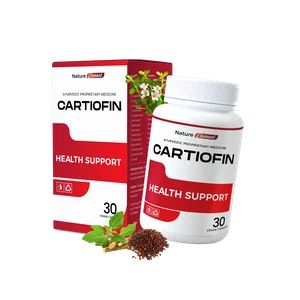
Two distinct lanes for adult cardiovascular wellness. Cartiofin is the modern Mediterranean formula — CoQ10 (ubiquinol), magnesium citrate, Hibiscus sabdariffa, aged-garlic-extract (Allium sativum), Crataegus oxyacantha (hawthorn), and Olea europaea (olive leaf) — synthesising Mediterranean-diet cardiovascular research with modern micronutrient cofactor biochemistry. Cardioton is the classical Ayurvedic Hridya Rasayana — Terminalia arjuna, Inula racemosa, Nardostachys jatamansi, Commiphora wightii, Convolvulus pluricaulis, and Valeriana wallichii — synthesising the Charaka Samhita Hridroga-Chikitsa and Sushruta Samhita Uttara-tantra Hridya categories with modern dose standardisation. Pick the lane that matches what tradition you specifically want — they are not directly competitive and there is no clinical rationale for stacking both in the same course.
Hridya is a Sanskrit Ayurvedic technical category meaning 'cardiac-supporting' or 'cardiac-tonic' — Hridaya being the Sanskrit term for the heart. The Charaka Samhita's Chikitsa-sthana and Sushruta Samhita's Uttara-tantra describe a category of herbs specifically classified for Hridya wellness, including Arjuna, Pushkarmool, Jatamansi, and several others. Rasayana means 'rejuvenation' — a Sanskrit category of preparations supporting tissue regeneration and resilience over time. Cardioton is a Hridya Rasayana — a classical Ayurvedic cardiovascular-wellness preparation with modern dose standardisation and disclosed Latin scientific names so users see exactly what they are taking.
No. Cardioton is deliberately distributed through this single nutritionist-reviewed catalogue rather than general pharmacy chains or third-party marketplaces. We do this for two reasons: it keeps the supply chain auditable end-to-end, and it prevents the counterfeit-Cardioton problem that affects many popular Indian Ayurvedic cardiovascular formulations once they appear on marketplaces with anonymous third-party sellers. Any listing claiming to be Cardioton outside this catalogue cannot be authenticated by us. To order, use the pay-on-delivery form on this page.
Speak to your treating cardiologist or physician BEFORE starting. The Guggul component in Cardioton has documented interaction potential with warfarin (anticoagulant), thyroid medication (levothyroxine and others), and possibly other cardiovascular medications. The broader Hridya herb stack requires medical awareness in the context of any prescribed cardiovascular medication. Your prescribing clinician must approve the combination — they may advise modified dosing or monitoring, or they may advise against the combination entirely depending on your medication regimen. Never start a nutritional supplement on top of prescribed cardiovascular medication unilaterally.
Cardioton is a nutritional Ayurvedic Rasayana, not a fast-acting drug. The classical Ayurvedic understanding and modern reviewed Rasayana literature both describe these formulations as building wellness effect over a multi-day consumption arc. Most users describe perceptible subjective wellness baseline changes between days 5 and 10 of the course. Cardioton is NOT designed to rapidly modify clinical cardiovascular measurements — and any product claiming to 'normalise blood pressure in 6 hours' or 'cure hypertension' should be treated with extreme scepticism, and Cardioton explicitly does not make those claims.
The 20-capsule / 10-day format matches classical Ayurvedic Hridya Rasayana cycling — short courses with washout periods rather than uninterrupted long-term consumption. Modern reviewed Rasayana literature generally supports this cycling approach for resin-and-herb cardiovascular stacks. The Guggul component in particular benefits from cycling because of its potential thyroid-axis effects with continuous long-term consumption. After a 10-day Cardioton course you can reassess your subjective wellness baseline, take a 7–14 day washout, and consider a second course alongside your physician-directed routine cardiovascular monitoring.
Cardioton is a nutritional layer on top of, not a substitute for, well-known cardiovascular-wellness lifestyle steps: reasonable sodium awareness (Indian processed foods can carry sub-optimal sodium loads), 30 minutes of moderate physical activity daily, 7–8 hours nightly sleep, reasonable alcohol moderation, smoking cessation if applicable, stress management, and continued routine medical monitoring (annual BP, lipid panel, ECG when indicated). The Jatamansi + Tagar + Shankhapushpi calming layer of Cardioton itself reflects the Ayurvedic understanding that emotional state and cardiovascular wellness are interconnected — the supplement works best when paired with that broader lifestyle frame.
Cardioton is a dietary supplement classified as a nutraceutical or food-for-special-dietary-use under applicable Indian nutraceutical regulations. It is not intended to diagnose, treat, cure or prevent any disease. Results vary by individual. Discontinue use and consult your doctor if any adverse symptom occurs. Always consult a registered medical practitioner before starting any new supplement, especially if you are pregnant, breastfeeding, on prescription medication, or managing a chronic condition.
Fill in your details — we will call to confirm the order, then dispatch.
Your order details have been received. Our team will call you within a few hours to confirm.